
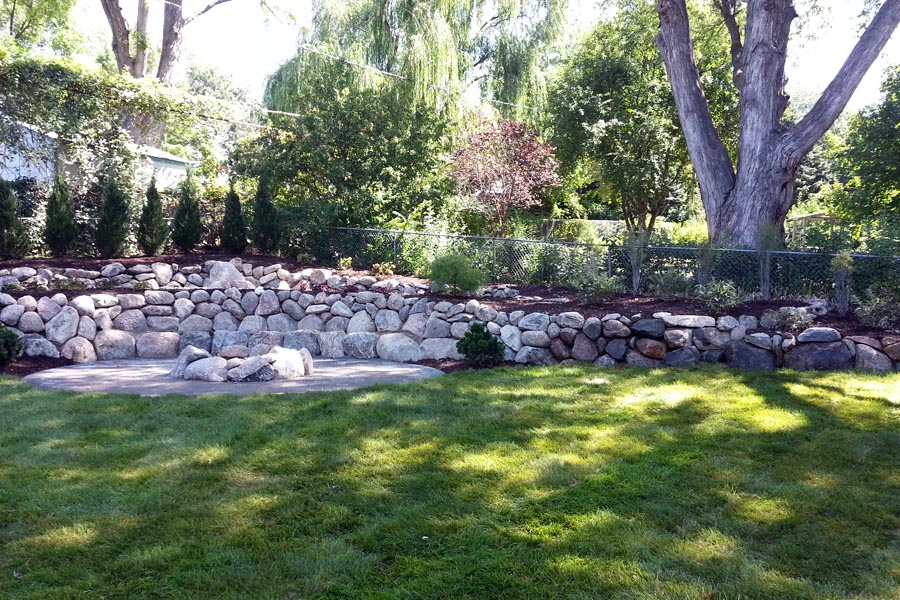
A retaining wall supports soil and manages water across uneven or unstable ground. If your yard has erosion, drainage issues, or sloped land that limits use, a retaining wall can help keep your landscape safe, functional, and visually balanced.
When Soil Starts to Shift
Soil should stay where it is placed. If you see dirt sliding downhill, building up against your home, or leaving behind bare patches, that may be a sign of erosion.
Watch for these signs:
• Soil collecting at the base of a slope
• Plant roots sticking out of the ground
• Exposed foundation edges
• Trouble keeping grass or plants in place
A retaining wall can keep the ground secure and preserve your yard’s layout.
Drainage Problems Near Your Home
Water that pools around your foundation or in low areas of your yard often indicates the need for improved drainage control. Retaining walls help direct water away from problem spots and reduce the chance of flooding or structural damage.
You may need a wall if you notice:
• Large puddles after a storm
• Watermarks on concrete or stone
• Soil that turns to mud in certain areas
• Nearby walkways or patios that always feel damp
This is especially common in Omaha yards with soft soil or poor drainage.
Sloped Land That Feels Hard to Use
If your yard has a steep slope, it likely limits what you can do with the space. Retaining walls enable you to shape the ground into flatter areas, making them easier to enjoy.
This can help:
• Create space for patios, play areas, or fire pits
• Make room for planting beds or trees
• Support safe walkways with even footing
• Divide areas for different functions
A level yard adds comfort and value without changing the natural look of the land.
Signs of Structural Pressure or Wall Damage
Soil and water put constant pressure on hard surfaces. If you already have a small wall or surface that is cracking, leaning, or falling apart, that means it is not strong enough to do the job.
Common warning signs include:
• Gaps in joints or between stones
• The wall that leans forward or backward
• Loose concrete or bricks
• Soil spilling over the top
Waiting can make the damage worse. A safe rebuild can protect your property and prevent more extensive repair costs later.
Outdoor Areas That Lack Privacy or Structure
Retaining walls are not only used for strength. They also improve the flow and layout of outdoor space. Walls can separate spaces, block street views, or add shape to a flat design.
Use walls to:
• Mark off a fire pit or seating zone
• Frame a walkway or entry path
• Support raised planting beds with color and texture
• Provide a boundary near a street or sidewalk
Jay Moore Landscaping designs walls that support both purpose and style.
A Yard That Lacks Visual Balance
Omaha Retaining walls help give your landscape shape. When combined with seasonal plants, water features, and thoughtful lighting, a wall can add structure and visual balance to a space.
Walls work well with:
• Curved or straight walkways
• Stone steps or garden paths
• Raised corners with planting beds
• Patios that need a natural backdrop
Omaha landscape design often blends function and beauty to increase long term value and ease of use.
Why Experience Matters
Not all walls are the same. A good wall must be built with the right materials, a suitable base depth, and proper drainage. If these steps are skipped or rushed, the wall may fail to meet its intended purpose.
Jay Moore Landscaping brings over 30 years of local experience. Each design is based on the layout of the land, the needs of the client, and the long term health of the space. From large outdoor structures to small planting beds, we plan with care and build with lasting results.
Schedule a Visit with Jay Moore Landscaping
If your yard has sloped areas, water problems, or hard to use spaces, a retaining wall may provide the right solution. Jay Moore Landscaping builds lasting outdoor structures that match both form and function. From design to installation to long term landscape maintenance, we help create outdoor spaces that feel natural, practical, and welcoming.